
Case study · SaaS product · AI document automation · German market
Building an AI-powered German letter generation SaaS
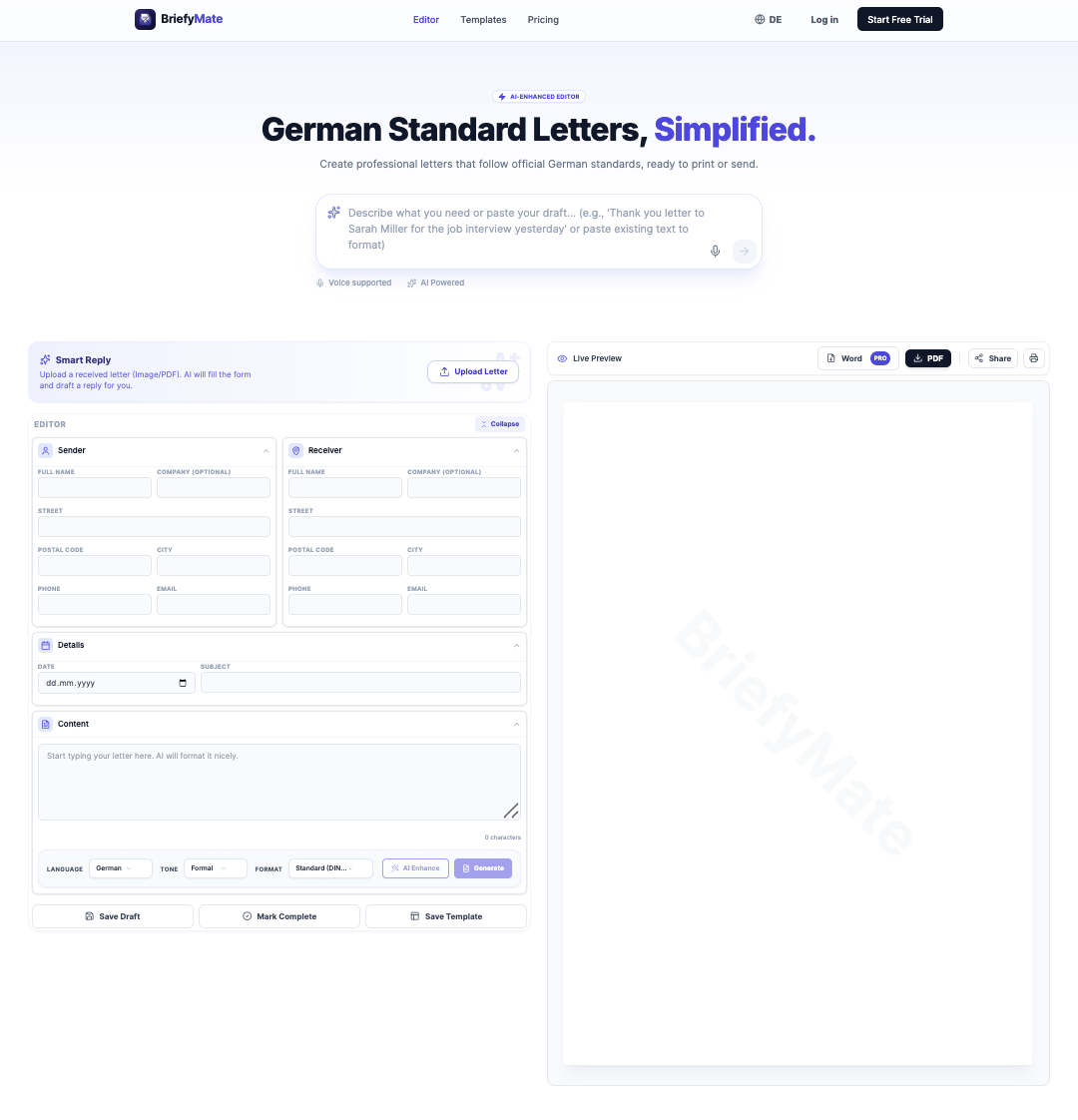
BriefyMate is an AI-powered SaaS product that helps users create structured German standard letters more quickly, with a focus on practical document generation and a clean user experience.
- Client / context
- Internal SaaS product
- Industry
- SaaS products · Document automation
- Year
- 2026
- Role
- Product strategy, full-stack development, AI integration
- Timeline
- Ongoing
- Status
- Live product
Platforms & deliverables
What was delivered
The concrete systems involved and what was shipped.
Platforms / systems
- Web application
- AI document generation workflow
- User-facing SaaS interface
- PostgreSQL-backed application
Deliverables
- SaaS product interface
- AI-powered letter generation flow
- German standard letter structure
- DIN 5008-aware formatting
- PWA setup
- Database-backed product architecture
- Deployment-ready web application
Business context
Why this project mattered
Many users in Germany need to write formal letters for administrative, contractual, or everyday situations, but writing in the correct tone and structure can be time-consuming, especially for non-native speakers or people unfamiliar with standard German letter formats.
Problem
What was slow, manual, or hard to maintain
- Writing correct, well-structured German letters is time-consuming and easy to get formally wrong.
- A generic AI chat interaction does not give users a guided, repeatable workflow.
- The product needed to stay simple and focused rather than open-ended.
Goal
What success meant
Build a lightweight SaaS product that helps users generate professional German standard letters through a clear form-based workflow and AI-assisted output.
Solution
What Cognivox Labs built
The complete path from logic to a production-ready system.
- Designed a clean user flow for entering letter context and recipient details.
- Integrated AI-assisted generation for structured German letter drafts.
- Focused the product around practical document output rather than open-ended chat.
- Built a responsive web interface with SaaS-ready architecture.
- Used a database-backed setup to support future product features and account-based workflows.
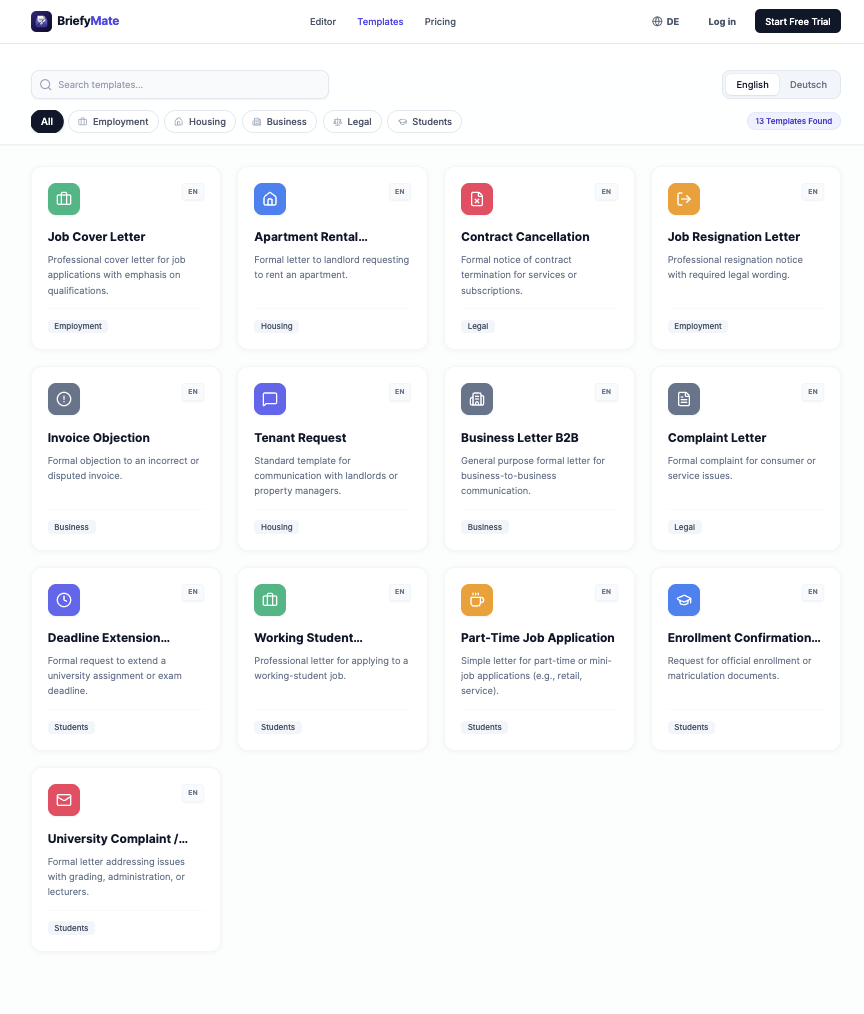
- Prepared the product for future improvements such as templates, saved letters, exports, and user accounts.
Engineering approach
Architecture and engineering decisions
The decisions that make the system maintainable and safe to run.
- Product-first workflow instead of generic AI chat.
- Structured inputs to improve output consistency.
- Clean frontend architecture with Next.js and TypeScript.
- Tailwind-based responsive UI.
- PostgreSQL-backed data model.
- PWA support for an installable, app-like experience.
- Deployment-ready architecture.
System flow
A clean service boundary keeps each part independently maintainable.
Impact
What changed
Qualitative, defensible outcomes - no inflated numbers.
- 01
Focused document workflow
Turned a common administrative writing task into a focused AI-assisted product workflow.
- 02
Reusable SaaS foundation
Created a reusable SaaS foundation for future document automation features.
- 03
Shipped AI product
Demonstrated the ability to move from product idea to a shipped AI-enabled web application.
- 04
German-market fit
Built a practical German-market product rather than a generic AI wrapper.
Tech stack
What it runs on
Frontend
Backend / data
AI / automation
Screenshots
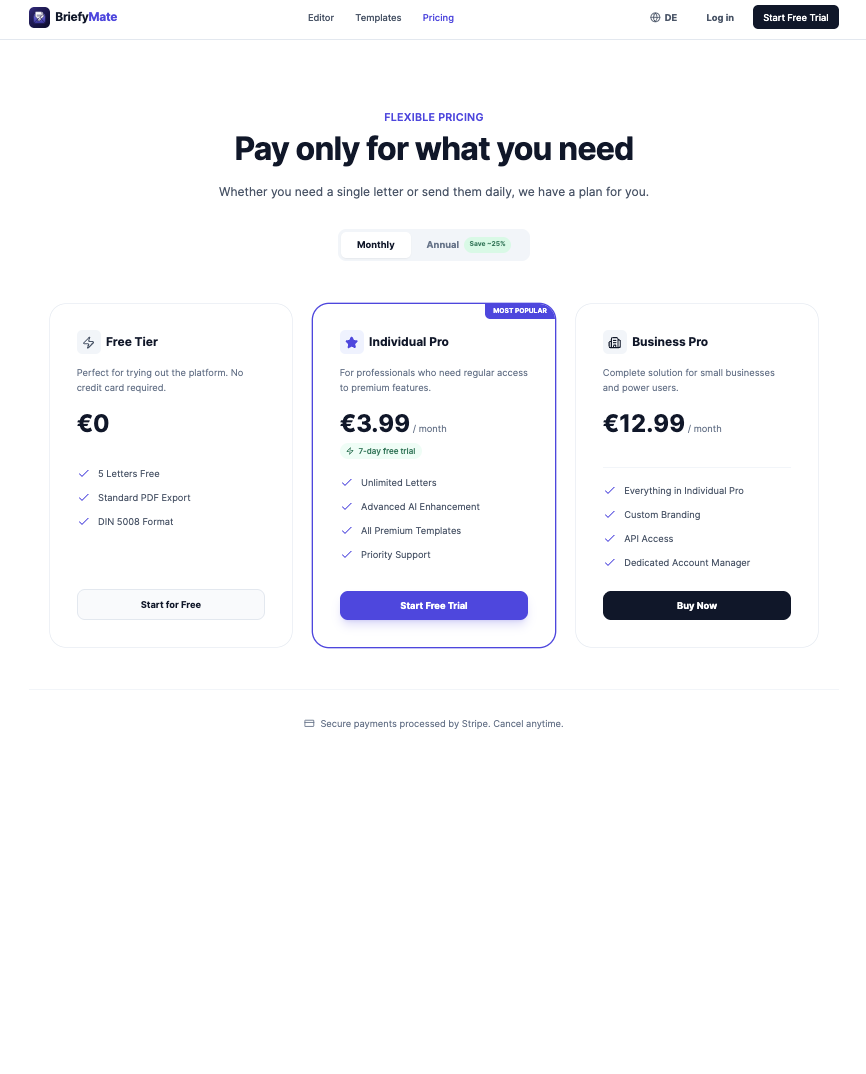
Inside the product
What this proves
Proves productising AI into a focused SaaS with real document constraints and a clean user experience - not a generic chatbot.
Building something similar?
Tell us what you’re trying to build. We’ll help you think through the architecture, scope, and first practical step.